5380 KING JAMES WAY SUITE A1, FITCHBURG, WISCONSIN 53719




STRENGTH TRAINING BLOG
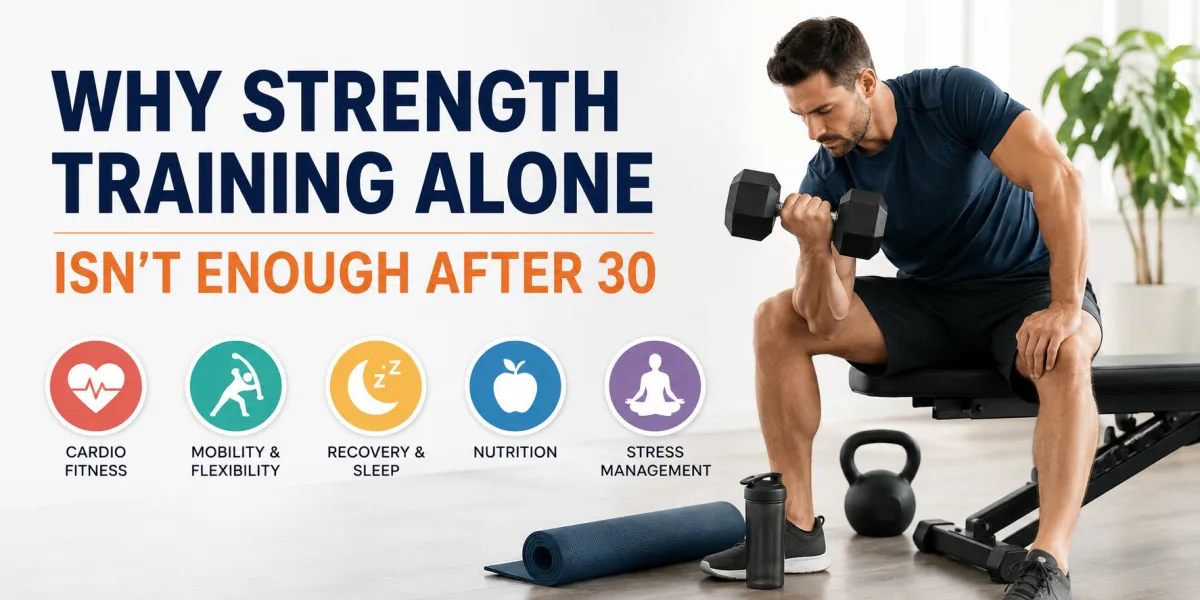
Why Strength Training Alone Isn’t Enough After 30 | Complete Longevity Guide
Strength training is one of the most effective ways to maintain muscle mass, support metabolism, improve bone density, and stay physically capable as you age. After 30, it becomes even more important because the body naturally begins to lose muscle tissue and strength over time.
However, while resistance training is a critical part of healthy aging, it is only one piece of the puzzle.
Many adults focus heavily on lifting weights while overlooking other factors that directly impact longevity, energy levels, recovery, cognitive function, and overall health. The result is often a fitness routine that builds strength but leaves important gaps in long-term wellness.
If your goal is not only to look stronger but also to move well, feel energized, reduce disease risk, and maintain independence as you age, strength training must be part of a broader strategy.
Want to understand your biological age and longevity risk factors?
Explore a comprehensive longevity assessment and take the first step toward healthier aging.
What Changes in the Body After 30?
Around age 30, several physiological changes begin to occur naturally:
Muscle mass gradually declines
Recovery takes longer
Hormone production starts to shift
Bone density may decrease
Metabolism becomes less efficient
Cardiovascular health requires greater attention
Joint mobility often declines due to inactivity and lifestyle habits
These changes don't happen overnight, but they accumulate over the years.
Strength training helps counter many of these effects. However, it cannot fully address every aspect of healthy aging on its own.
The Problem with a Strength-Only Approach
Many people assume that if they lift weights three or four times per week, they have all their health bases covered.
Unfortunately, that's not always the case.
Someone can be strong yet still struggle with:
Poor cardiovascular endurance
Chronic inflammation
Limited mobility
Sleep problems
High stress levels
Nutritional deficiencies
Elevated blood pressure
Metabolic dysfunction
Longevity is influenced by multiple systems working together. Strength is one marker of health, but it is not the only one.
Cardiovascular Fitness Still Matters
One of the biggest mistakes adults make after 30 is neglecting cardiovascular exercise.
While strength training benefits heart health, it does not replace dedicated aerobic conditioning.
Regular cardiovascular exercise helps:
Improve heart function
Lower blood pressure
Enhance circulation
Increase endurance
Improve insulin sensitivity
Support brain health
Reduce the risk of heart disease
Walking, cycling, swimming, jogging, rowing, and interval training can all contribute to cardiovascular fitness.
Research consistently shows that maintaining strong cardiorespiratory fitness is closely linked to longer life expectancy and reduced risk of chronic disease.
Recommended Goal
Aim for:
150 minutes of moderate-intensity cardio weekly, or
75 minutes of vigorous-intensity cardio weekly
Combining strength and aerobic training provides more comprehensive health benefits than either approach alone.
Mobility Is Essential for Long-Term Movement
Being able to lift heavy weights does not automatically mean you move well.
Mobility often declines due to:
Desk jobs
Reduced physical activity
Previous injuries
Repetitive movement patterns
Aging-related stiffness
Without adequate mobility, strength gains can become less functional.
Mobility training helps:
Improve joint range of motion
Reduce injury risk
Enhance exercise performance
Support balance and coordination
Maintain independence later in life
Simple mobility practices include:
Dynamic stretching
Yoga
Mobility flows
Foam rolling
Joint-specific movement drills
Just 10–15 minutes per day can make a significant difference.
Recovery Becomes More Important with Age
In your twenties, you may have been able to push through poor sleep and intense training without noticeable consequences.
After 30, recovery becomes a major factor in performance and health.
Recovery affects:
Muscle repair
Hormone balance
Immune function
Energy production
Mental clarity
Injury prevention
Without proper recovery, even the best strength program can lead to fatigue, stalled progress, and increased injury risk.
Key Recovery Habits
Prioritize:
7–9 hours of quality sleep
Active recovery days
Hydration
Stress management
Appropriate training volume
Recovery is not a sign of weakness. It is a necessary component of adaptation and long-term progress.
Nutrition Plays a Bigger Role Than Most People Realize
Strength training stimulates muscle growth, but nutrition provides the building blocks needed to support that process.
After 30, nutritional quality becomes increasingly important for:
Maintaining lean muscle
Managing body composition
Supporting hormone health
Preserving bone density
Optimizing energy levels
A well-rounded nutrition plan should emphasize:
High-quality protein
Fruits and vegetables
Healthy fats
Whole-food carbohydrates
Adequate hydration
Protein Is Especially Important
Protein requirements often increase with age due to reduced anabolic sensitivity.
Many experts recommend consuming protein consistently throughout the day to support muscle maintenance and recovery.
Strength training without proper nutrition is like building a house without enough materials.
Sleep Is a Longevity Superpower
Many people underestimate how much sleep affects physical health.
Even if you train consistently, inadequate sleep can undermine progress by affecting:
Muscle recovery
Cognitive performance
Metabolism
Hormone regulation
Immune function
Appetite control
Poor sleep has also been associated with increased risks of:
Obesity
Type 2 diabetes
Cardiovascular disease
Cognitive decline
Creating a consistent sleep routine may have as much impact on long-term health as some aspects of exercise programming.
Stress Management Influences Physical Health
Chronic stress can negatively affect nearly every system in the body.
When stress remains elevated for prolonged periods, it can contribute to:
Increased inflammation
Poor recovery
Sleep disruption
Elevated blood pressure
Hormonal imbalances
Increased body fat accumulation
Even highly active individuals can experience health challenges if stress is consistently unmanaged.
Helpful stress-management practices include:
Meditation
Breathwork
Walking outdoors
Journaling
Mindfulness exercises
Spending time with family and friends
Physical fitness and mental wellness should be viewed as interconnected goals.
Bone Health Requires More Than Lifting Weights
Strength training supports bone density, but bone health also depends on:
Adequate calcium intake
Vitamin D levels
Hormonal balance
Nutritional status
Overall physical activity
As adults age, maintaining bone strength becomes increasingly important for reducing fracture risk and preserving mobility.
A comprehensive health plan combines resistance training with proper nutrition and regular health monitoring.
Balance and Coordination Should Not Be Ignored
Falls become a major health concern later in life.
While balance may not seem important at 30 or 40, developing these skills early can provide long-term benefits.
Balance training supports:
Injury prevention
Athletic performance
Joint stability
Functional movement
Healthy aging
Examples include:
Single-leg exercises
Stability drills
Yoga
Tai chi
Functional movement patterns
Strong muscles are valuable, but being able to control those muscles effectively is equally important.
Longevity Requires a Multi-System Approach
Modern longevity research increasingly emphasizes the importance of maintaining multiple dimensions of health simultaneously.
These include:
Strength
Supports muscle mass, metabolism, and physical function.
Cardiovascular Health
Supports heart function, circulation, and endurance.
Mobility
Helps maintain movement quality and joint health.
Recovery
Allows adaptation and reduces injury risk.
Nutrition
Provides the resources needed for optimal performance and aging.
Sleep
Supports nearly every biological process.
Mental Well-Being
Reduces the harmful effects of chronic stress.
The healthiest individuals are rarely those who focus on only one category. Instead, they consistently invest in all of them.
A More Effective Fitness Strategy After 30
Rather than viewing strength training as the entire solution, think of it as one pillar within a complete wellness framework.
A balanced weekly routine may include:
3–4 strength-training sessions
2–4 cardiovascular workouts
Daily mobility work
Consistent sleep habits
High-quality nutrition
Active stress management
Recovery-focused practices
This approach supports not only physical performance but also long-term resilience, vitality, and healthy aging.
Strength is only one piece of the longevity puzzle.
Learn how a personalized wellness plan can help you optimize health, performance, and vitality.
The Bottom Line
Strength training remains one of the most powerful tools for maintaining health after 30. It helps preserve muscle mass, support metabolism, improve bone density, and enhance quality of life.
However, strength alone is not enough.
True longevity depends on a combination of cardiovascular fitness, mobility, recovery, nutrition, sleep, stress management, and overall lifestyle habits. When these elements work together, they create a foundation for lasting health and functional independence.
If your goal is to stay strong, energetic, and capable for decades to come, think beyond the weight room and build a comprehensive approach to wellness.
Frequently Asked Questions
Is strength training still important after 30?
Absolutely. Strength training helps counter age-related muscle loss, supports metabolism, improves bone density, and enhances overall physical function.
How many days per week should adults over 30 strength train?
Most adults benefit from 2–4 strength-training sessions per week, depending on fitness level, recovery capacity, and goals.
Can cardio replace strength training after 30?
No. Cardio and strength training provide different benefits. A balanced routine should include both resistance training and cardiovascular exercise.
Why is mobility important as you age?
Mobility helps maintain joint health, movement quality, balance, and injury prevention. It becomes increasingly important as natural stiffness develops with age.
What is the biggest factor for recovery after 30?
Sleep is often the most influential recovery factor. Consistently getting 7–9 hours of quality sleep supports muscle repair, hormone function, and overall health.
Does strength training increase longevity?
Research suggests that maintaining muscle strength and physical activity is associated with longer life expectancy and improved quality of life. However, longevity is best supported by combining strength training with healthy lifestyle habits.

5380 KING JAMES WAY SUITE A1, FITCHBURG, WISCONSIN 53719
And Serving Madison, Verona, Middleton, and surrounding areas.


