5380 KING JAMES WAY SUITE A1, FITCHBURG, WISCONSIN 53719




STRENGTH TRAINING BLOG
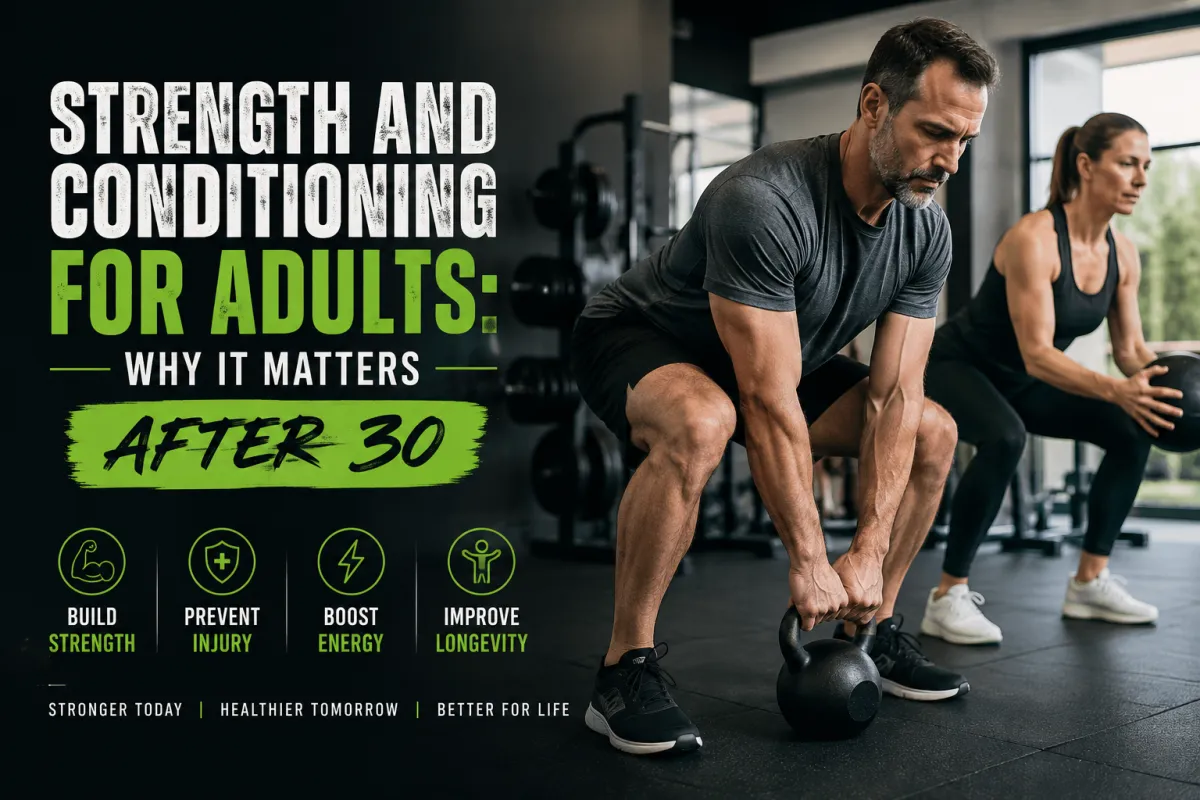
Strength and Conditioning for Adults: Why It Matters After 30
Turning 30 doesn't mean your best fitness years are behind you but it does mean the rules change. Metabolism shifts, recovery takes longer, and the muscle you're not actively maintaining starts to quietly disappear. The adults who stay strong, mobile, and injury-free into their 40s, 50s, and beyond aren't the ones who ran the most miles. They're the ones who prioritized strength and conditioning for adults as a non-negotiable part of their routine.
At Functional Integrated Training (FIT) in Fitchburg, WI, this is the foundation everything else is built on. Here's why strength has to lead the way after 30, and how our coaches build programs that fit real adult lives.
Why Cardio Isn't Enough After 30
For decades, cardio got the credit for "staying fit." Running, cycling, and group cardio classes are great for heart health, but on their own they don't address the biggest physical shift happening in your 30s: muscle loss.
Starting around age 30, adults naturally begin losing muscle mass and strength each decade if they aren't actively training against it. That loss shows up as a slower metabolism, more nagging joint pain, worse posture, and a body that fatigues faster during everyday tasks carrying groceries, playing with kids, keeping up on the golf course or the ski hill.
Cardio alone can't reverse that trend. It trains your heart and lungs, but it doesn't rebuild the muscle, bone density, or connective tissue strength your body needs to hold up over time. Without a strength component, adults often end up "skinny fat" lower body weight, but not more resilient and increasingly prone to injury from movements that used to be effortless.
Strength as the Foundation for Longevity
Strength training does what cardio can't: it directly targets the systems that determine how well you move and function as you age.
Preserves and builds muscle mass, which protects your metabolism and your independence later in life
Increases bone density, lowering the risk of fractures and osteoporosis down the road
Improves joint stability and movement quality, reducing everyday aches and injury risk
Builds the kind of functional strength that carries over to real life lifting, carrying, bending, and reacting quickly
Supports better sleep, mood, and energy through the hormonal and metabolic effects of resistance training
This is why strength and conditioning for adults should be viewed less as a "gym goal" and more as long-term maintenance for the body you'll be living in for the next 40+ years. The strength you build in your 30s and 40s is what determines how independently and confidently you move in your 60s and 70s.
The good news: conditioning still has a place. The most effective programs combine strength work as the foundation with conditioning layered in for cardiovascular health, fat loss, and stamina not the other way around.
FIT's Coaching Approach for Adults
At FIT, adult strength and conditioning starts with a real assessment, not a generic template. Every member begins with a free discovery call and a hands-on movement evaluation, so coaches understand your starting point, any past injuries or limitations, and what you're actually training for whether that's staying active with your kids, performing better in a weekend sport, or simply feeling strong again.
From there, your coach builds a program around proven strength fundamentals safe lifting technique, progressive overload, and mobility work layered with conditioning and recovery so training fits your schedule and your body's needs, not a one-size-fits-all class.
Whether you train one-on-one through Personal Training or alongside others in Small Group Training, the coaching relationship stays personal every session is guided, corrected, and adjusted by a coach who knows your goals.
That's the difference between working out and actually training: a plan built for your body, coached by people who are paying attention.
Ready to Build Real Strength?
If your current routine is all cardio and no strength or no consistent plan at all now is the moment to change that. Strength and conditioning for adults isn't about chasing a number on the scale; it's about building a body that holds up for decades.
Start with a free fitness assessment and find out where your training should begin.
Start Your Fitness Assessment →
FAQs
At what age should adults start strength training?
Any age is a good age to start, but coaches generally recommend prioritizing strength training by your early 30s, when natural muscle loss begins, to stay ahead of the curve rather than trying to reverse years of decline later.
Can I do strength training if I've never lifted weights before?
Yes. FIT's programs start every new member with a personal evaluation so coaches can build a plan around your current ability and progress you safely, regardless of experience level.
How often should adults do strength and conditioning training?
Most adults see strong results training two to four times per week, combining strength work with conditioning and recovery your coach will tailor frequency to your goals and schedule.
5380 KING JAMES WAY SUITE A1, FITCHBURG, WISCONSIN 53719
And Serving Madison, Verona, Middleton, and surrounding areas.


