Isometric Workouts for Strength Without Strain | Fitchburg, WI
How Isometric Exercises Strengthen Adult Fitness Goals Without Strain
Blog Description:
Strengthen your body without strain! Learn how isometric workouts improve endurance, posture, and muscle activation while protecting joints. Join Functional Integrated Training in Fitchburg, WI, for expert-guided strength training. Request More Info Now!
Many adults struggle with workouts that cause joint pain, fatigue, or slow recovery. This makes it difficult to stay consistent and achieve lasting results. At Functional Integrated Training in Fitchburg, WI, we introduce isometric workouts, a low-impact yet powerful way to build strength, endurance, and stability. These exercises activate muscles without excessive strain, making them an ideal fitness solution for adults looking to stay strong and injury-free.
What Are Isometric Workouts?
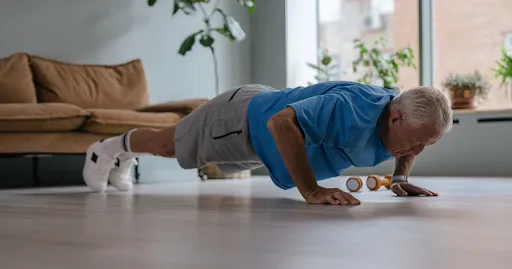
Isometric workouts involve holding a position without movement while engaging muscles under tension. Unlike traditional exercises that rely on repetitive motions, isometric exercises focus on static strength, helping improve endurance and stability.
Unlike weightlifting or high-impact workouts, isometric exercises don’t rely on continuous movement. Instead, they activate muscles by maintaining a fixed position, increasing strength and endurance while minimizing wear and tear on joints.
The Science Behind Isometric Training
Muscle contractions occur in three primary ways:
Concentric contractions: When muscles shorten during movement (e.g., lifting a dumbbell).
Eccentric Contractions: When muscles lengthen while resisting weight (e.g., lowering a dumbbell).
Isometric Contractions: when muscles engage without changing length (e.g., holding a plank).
Isometric training effectively builds muscle by keeping tension in the targeted area, improving muscle endurance and increasing strength without excessive strain. This makes it a preferred training method for those recovering from injuries or seeking low-impact alternatives.
Why Are Isometric Workouts Ideal for Adults?
As the body ages, high-impact workouts can lead to injuries, joint pain, and longer recovery times. Isometric workouts allow adults to train safely while still achieving significant strength gains.
1. Strength Without Joint Stress
High-impact movements can be tough on aging joints, leading to stiffness and inflammation. Isometric workouts engage muscles without unnecessary strain, making them ideal for individuals with arthritis, past injuries, or joint sensitivity.
2. Improved Posture and Core Stability
Poor posture leads to back pain, neck tension, and muscle imbalances. Isometric exercises such as planks, wall sits, and glute bridges help strengthen the core, reducing discomfort and improving spinal alignment.
3. Increased Endurance and Muscle Activation
Holding a static position forces muscles to work harder over time, leading to greater muscular endurance. Exercises like isometric squats and shoulder holds help develop the ability to sustain muscle engagement, essential for daily activities and athletic performance.
4. Faster Recovery and Injury Prevention
High-impact workouts often lead to soreness and long recovery times. Isometric workouts minimize muscle damage, allowing for more frequent training sessions without excessive fatigue.
Best Isometric Exercises for Adults
1. Plank (Core & Upper Body Strength)
Keep your body in a straight line, engaging your core and shoulders.
Hold for 30-60 seconds.
2. Wall Sit (Lower Body & Endurance)
Sit against a wall with your knees at a 90-degree angle.
Hold for 45-60 seconds.
3. Isometric Squat Hold (Leg Strength & Stability)
Lower into a squat position and hold without movement.
Engage your glutes and quadriceps for 30-60 seconds.
4. Shoulder Press Hold (Upper Body & Posture Support)
Hold dumbbells at shoulder level without pressing up.
Keep muscles engaged for 20-45 seconds.
5. Glute Bridge Hold (Core & Lower Back Support)
Lift your hips and hold at the top while squeezing your glutes.
Maintain for 30-45 seconds.
6. Calf Raise Hold (Balance & Ankle Strength)
Raise onto your toes and hold the position.
Keep steady for 30 seconds.
How to Incorporate Isometric Training into Your Routine
If you’re new to isometric training, start by adding 3-4 exercises to your current routine. Focus on proper form, breathing, and engaging the right muscles.
Beginner Routine (10-Minute Session):
Plank: 30 seconds;
Wall Sit: 45 seconds;
Shoulder Press Hold: 20 seconds;
Glute Bridge Hold: 30 seconds
Advanced Routine (20-Minute Sessions):
Plank: 1 minute;
Isometric Squat Hold: 45 seconds;
Wall Sit: 60 seconds;
Shoulder Press Hold: 30 seconds;
Glute Bridge Hold: 45 seconds
Repeat for 2-3 rounds based on your fitness level.
Are isometric workouts effective for weight loss?
While isometric exercises alone won’t burn as many calories as cardio workouts, they help build muscle, which increases metabolism over time. When combined with a healthy diet and active lifestyle, isometric workouts contribute to fat loss by improving muscle endurance and stability.
Maximizing Fat Burn with Isometric Training
Combine isometric workouts with strength and cardio exercises.
Hold each position longer to challenge your muscles.
Use resistance bands or weights to increase intensity.
Maintain a calorie-controlled diet for weight management.
Isometric Workouts for Pain Relief & Injury Recovery
Isometric exercises are often recommended in physical therapy to aid recovery from injuries. Because these workouts build strength without causing joint movement, they help individuals recover from knee injuries, shoulder pain, or lower back discomfort.
Best Isometric Exercises for Pain Management:
Knee Pain: Wall sits and isometric leg lifts
Shoulder Pain: Isometric shoulder external rotation
Lower Back Pain: Glute bridge and plank variations
Who Should Try Isometric Exercises?
Isometric workouts are ideal for:
Adults looking for low-impact strength training;
Seniors aiming to maintain mobility and stability;
Individuals recovering from injuries or dealing with joint pain;
Athletes wanting to improve endurance and muscle activation
Who Should Be Cautious?
Individuals with high blood pressure should consult a doctor before engaging in isometric exercises, as prolonged static contractions can temporarily elevate blood pressure.
Conclusion:
At Functional Integrated Training in Fitchburg, WI, we specialize in strength training programs that prioritize safety and results. Our expert trainers guide you through effective isometric exercises tailored to your fitness level. Whether you're aiming to build strength, reduce joint pain, or improve endurance, our personalized approach helps you stay active and injury-free.
Want to experience the benefits of isometric workouts firsthand? Click the "Request More Information" button today and start your journey toward better strength, stability, and fitness!